The UK commercial energy sector is changing quickly. The impact of increasing electricity costs, tougher carbon regulations, and corporate net-zero commitments are changing the way companies purchase energy. Solar is no longer viewed by companies in the UK as just “nice to have” when it comes to the sustainability aspect of their energy consumption. Commercial solar/solar installation and implementation have now become an integral part of a company’s long-term energy strategy, controlling costs and sustainability (ESG) rating.
With the increasing urgency to meet decarbonisation goals and continuing volatility of wholesale electricity pricing, implementing commercial solar projects provides a practical method to achieve energy resilience. Organisations are also turning to structured delivery and financing models as a means of unlocking value through commercial solar projects, whichever type of project the organisation pursues, from small rooftop systems on logistics centres to large ground-mounted solar park-type systems on industrial estates.
This article will provide a high-level overview of how to implement and install commercial solar projects in the UK, the different types of delivery models available for commercial solar projects, and the financial structures used to support bankable renewable energy deployment.
In This Article
What Are Commercial Solar Projects?
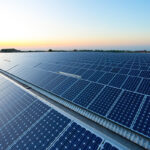
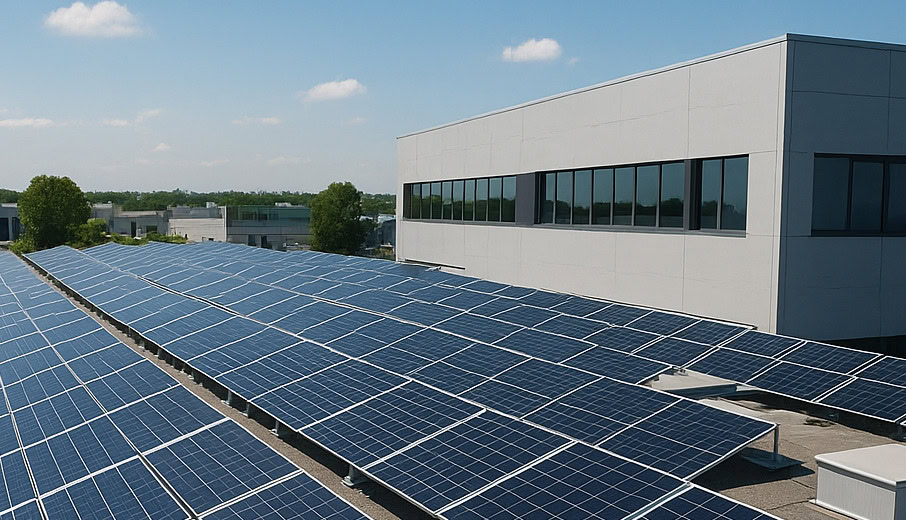
Commercial solar projects involve the design, installation, and operation of solar photovoltaic (PV) systems for businesses, property owners, or public sector organisations. Commercial solar PV systems can include:
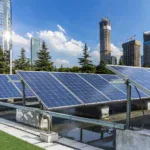
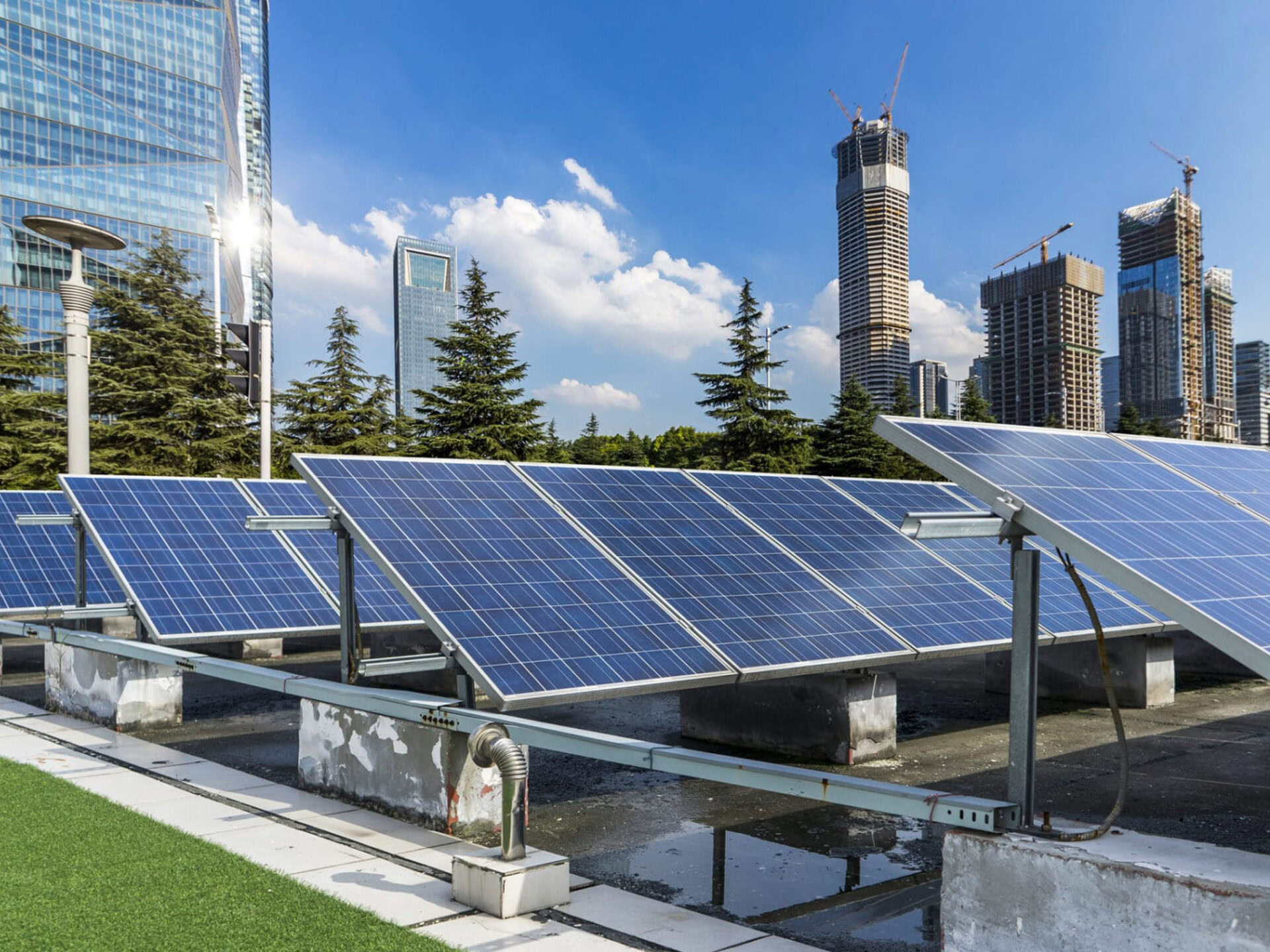
- Roof-mounted solar PV installations (e.g., on warehouse, office, or retail park roof),
- Ground-mounted solar PV arrays (e.g., on surplus land),
- Carport solar PV structures integrated with EV charging services.
Directly connecting to the grid via a private wire system for purposes of meeting the power demands of a company or property owner (or a third party).
The installation of commercial solar energy systems is generally more complex and larger than installing a residential system. It often requires in-depth feasibility studies, grid connection assessments, structural surveys, and financial modelling prior to being completed.
How Commercial Solar Systems Are Installed
The installation of commercial solar systems has several different steps to be completed to successfully complete a commercial solar energy project in the UK:
- Feasibility Study and Site Assessment.
The feasibility study will involve a detailed technical and financial review to see if the project is going to work, including ananalysis of the condition and structural integrity of the roof, analysing the building’s historical energy consumption, checking on how much green energy can be supplied from the existing grid, and ensuring that planning approvals and permits are in place. Once the above items have been analysed, the system size is determined (kWh generated), and the savings and carbon reductions to the project will then be reviewed; this could be expected to give to the completed project from the implementation of the solar arm of the project.
- System Design and Engineering
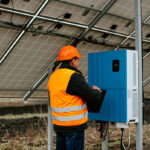
Once the system is confirmed to work, the next step will be for the engineering team to design the system to be implemented. The engineering component of the system should include the best layout for the solar panels, inverters, types of mounting systems to use, how and where to connect the power from the solar panels to the inverter(s) and to how to path the wiring to connect the inverter(s) to the mains supply while meeting UK grid safety and compliance requirements as per DNO.
- Procurement & Financing Structure
Commercial solar projects in the UK are typically delivered through one of three primary models:
| Delivery Model | Upfront CAPEX Required | System Ownership | Electricity Cost | Suitable For |
| Direct Purchase | Yes | Business | Lowest long-term cost | Strong balance sheets |
| On-Site PPA | No | Developer | Discounted fixed rate | Capex-sensitive firms |
| Private Wire | Usually shared | Generator/Hybrid | Reduced network charges | Large industrial users |
- On-Site Solar Power Purchase Agreement (Zero Capital Model)
A solar Power Purchase Agreement (PPA) for on-site generation allows a developer to install and maintain a solar PV system without providing any upfront capital (on behalf of the business) for the system. Under this model, the developer owns, funds, and maintains the solar PV generation system, while the business purchases electricity from the system at a fixed price (or a discounted rate) for a termination period of 10-25 years. Under this model, there is no upfront capital expenditure (CAPEX) incurred by the business. The “zero capital solar” model is more attractive to organizations that require immediate energy savings without impacting their balance sheet.
- Off-Site / Utility Scale Solar Power Purchase Agreements
In certain instances, businesses purchase electricity from larger, more powerful utility-scale solar farms located away from their own facilities in the UK. These off-site sellers operate under the same terms, conditions, and structures as corporate PPAs in other renewable energy procurement strategies.
Off-site PPA agreements provide the following business benefits:
- Guaranteed long-term fixed pricing for electricity
- Support for the development of new renewable energy generation capacity
- Enhanced Environmental Social Governance (ESG) reporting credentials
- Volume flexibility across multiple locations
These purchasing models generally align with corporate procurement strategies, which are used in other segments of the UK renewables market.
- Private Wire Solar Projects
A private wire solar Project is when a Commercial Facility has a direct physical link to a Solar Generator (Solar).
Because electricity is not passing through the public grid:
- There may be some reduction in the Applicable Network Charges
- Policy-related costs may also be minimised
- Greater Pricing Control
- Improved Certainty of Long-Term Supply
- Suitable for an Energy-Intensive Manufacturing or Logistics Facility adjacent to land would have a Private Wire arrangement.
Key Commercial Solar Financing Models in the UK Commercial Survey
Commercial Solar Projects are also underpinned by Structured Financing to increase Bankability
- Direct Ownership (CAPEX Model)
The company funds the installation directly and owns and operates System
Advantages:
Highest long-term returns
Full Asset Ownership
Full benefit of Renewable Energy Guarantees of Origin (REGOs)
Considerations:
- Upfront Capital Outlay
- Responsibility for Maintenance
- Solar Lease Agreements
- Third-party installs the system
- The company pays a Fixed Lease Payment
- The company uses Electricity Generated On-Site
- Provides predictable budgeting and preserves Cash Capital
- Commercial Power Purchase Agreements (PPA)
Commercial Solar PPAs share Similarities to Corporate Renewable Procurement Models that operate in the UK
i.e., Using structures commonly used in UK Energy Markets, Commercial Companies can Private Wire between Fixed, Indexed, or Hybrid prices
Renewable Energy Advisors’ Role
The implementation of commercial solar is both a technical and legal challenge that requires knowledge about regulatory requirements and financing. Having an independent advisor can help mitigate risk while also increasing the long-term value of the project for an organisation.
Arc Renewables delivers support to companies in the UK by:
- Conducting feasibility studies.
- Designing and installing turnkey solar systems.
- Structuring commercial PPAs.
- Managing procurement & selecting contractors.
- Overseeing installation & commissioning.
- Providing Operations & Maintenance long-term oversight.
Advisory partners use a systematic data-driven methodology to assist organisations with transitioning from their current carbon baseline to developing measurable net-zero implementation strategies.
What is the future for Commercial Solar in the UK?
Commercial solar will have an enormous impact on:
- Integrating battery storage.
- Developing hybrid wind/solar portfolios.
- Co-locating storage and solar assets.
- Meeting 24×7 Carbon Free Energy matching requirements.
- Providing more flexibility through the reforms occurring in electricity markets.
The acceleration of the United Kingdom toward net zero means that commercial solar installation and structured implementation will play crucial roles in corporate energy strategy as we head toward the UK government’s commitment to achieving net zero emissions by 2050.
Frequently asked questions (FAQs) about commercial solar installation and implementation in the UK:
- What is a commercial solar project?
Ans. A commercial solar project is the installation of photovoltaic (PV) systems on sites owned or occupied by businesses or businesses’ authorized agents in order to produce renewable energy to use in a business’s facilities or to provide renewable electricity to the grid according to a structured energy agreement.
- How long does a commercial solar installation take?
Ans. The time it takes to complete a commercial solar installation depends on many factors such as project size, number of grid approvals, etc., but most rooftop solar projects will be completed throughout the planning and procurement phases within a few weeks.
- Do businesses have to get planning permission for solar panels?
Ans. Most rooftop solar installations are permitted under permitted development rights in the UK, but they do still require both structural and grid approvals. Also, ground-mounted (land-mounted) solar systems will require formal planning approval.
- How long do commercial solar systems typically last?
Ans. Commercial PV systems typically have an operational life of 25-30 years and inverters typically need to be replaced at some point during the life of a commercial solar system.
- Can commercial solar help businesses achieve their net-zero targets?
Ans. Yes; the installation of solar systems helps businesses to reduce their Scope 2 emissions and supports businesses to implement their broader Environmental, Social, and Governance (ESG) initiatives and decarbonisation strategies.