
PPA Financing Models: Commercial Power Purchase Agreements in the UK
Multiple reasons for this changing landscape include: decarbonisation targets, electricity price volatility (spikes in electricity prices), and corporate net zero commitments. Commercial Power Purchase Agreements (PPAs) have become important components of the procurement strategy that many UK businesses have chosen to use for purchasing and using renewable energy. To provide companies with long-term price certainty for electricity while continuing to support renewable energy projects, corporations are choosing different types of corporate PPA UK structures (fixed-price PPAs, virtual PPAs, and private-wire arrangements) depending on their unique requirements. This article provides an overview of how various types of PPA financing models operate and their role in facilitating renewable energy financing in the UK. The article will also outline some key factors to be aware of when executing a bankable commercial PPA.
In This Article
What are Power Purchase Agreements in the UK?
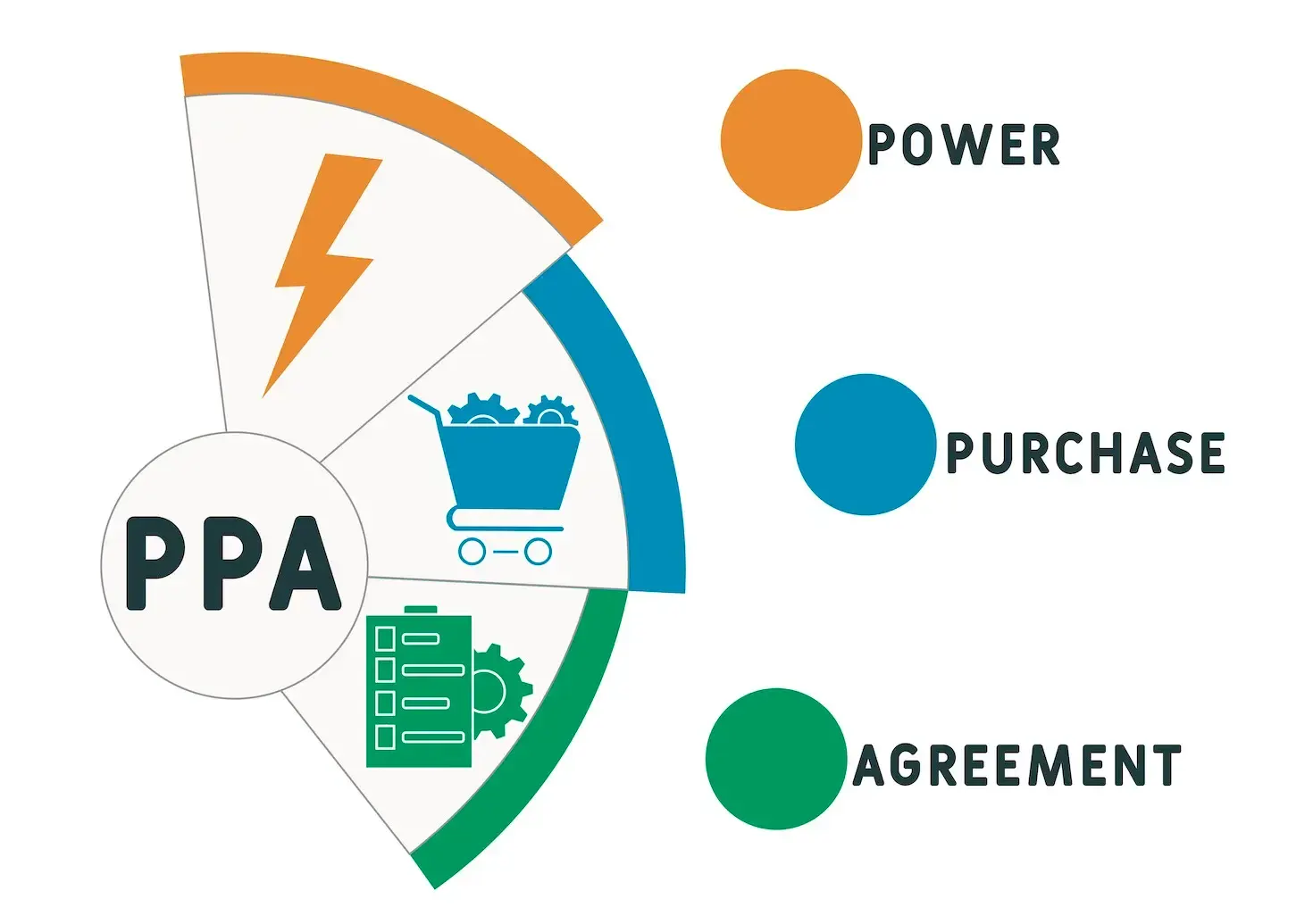
A commercial Power Purchase Agreement is a long term renewable electricity agreement between the seller (power producer) and the buyer (purchaser) that outlines the terms for the sale and purchase of electricity over a period. This agreement can usually range from 10-30 years and include important details like the price of electricity and the duration of the agreement.
According to Scoop Market, the global Power Purchase Agreement Market is estimated to reach USD 444.3 billion by 2033 that highlights the strong growth. The renewable capacity contracted through corporate power purchase agreements globally has experienced a rapid growth from 2012 to 2023 that indicate the strong global shift towards energy procurement. The Renewable PPA market score in the UK was 82.2 in 2023.
Power Purchase Agreements in the UK can provide price certainty for both parties and are commonly used in the renewables energy projects that can ensure long-term financial stability.
The reasons behind the significant growth of the corporate PPAs in the UK are the organisations that seek:
- Protection against wholesale market volatility
- Long-term price stability
- Scope 2 emissions reduction
- Alignment with ESG and net zero energy procurement strategies
Commercial PPAs are different from those short term supply contracts that usually underpin renewable energy project finance that provide developers with predictable revenue streams.
How Commercial Power Purchase Agreements Work
There are three key parties involved when it comes to a typical commercial PPA UK structure. Here are these three key parties:
- The renewable generator (wind or solar developer)
- The corporate buyer (offtaker)
- A licensed electricity supplier
Electricity can be physically delivered to the corporate site or financially settled, depending on the structure.
- Physical PPA UK
Electricity, under a physical PPA, is generated by a wind or solar farm and is sold directly to the corporate buyer via a licensed supplier. The physical PPA often takes the form of a sleeved PPA, where the supplier manages balancing and grid settlement.
- Virtual PPA UK (Synthetic PPA)
A virtual power purchase agreement is a financial contract where the generator sells the power into the wholesale market and the corporate buyer settles the difference between the market price and the agreed strike price.
What are the Types of PPA Financing Models in the UK
- On-Site PPA Financing
An onsite solar PPA UK allows the developer to install solar panels on the land without any upfront capital expenditure. This is the zero capital solar UK model that simply means:
- The developer will own and maintain the system
- There is no initial CAPEX required.
- The business buys the electricity at a discounted rate.
- Off-Site / Utility-Scale PPA Financing
An off site PPA UK can support large wind or solar farms where the corporate buyer agrees to purchase electricity from a utility-scale renewable asset.
These two are the crucial agreements that are critical for PPA project finance in the UK. Long–term fixed price PPA UK contracts can improve the bankability and can reduce merchant risk exposure.
- Virtual Power Purchase Agreements (VPPA UK)
The VPPA UK model is used by the corporates with multiple UK sites. Virtual Power Purchase agreements offer:
- Financial hedging against electricity price volatility
- No physical delivery requirement
- Flexibility across multi site portfolios
- Private Wire PPA UK
A private wire PPA UK has a direct connection between a renewable generator and the corporate site. The electricity does not pass through the public grid, so the businesses may reduce certain network charges and policy costs.
The Role of Renewable Energy Advisors in Structuring Commercial PPAs
Commercial PPAs can offer significant financial and environmental benefits, but the structure of a bankable agreement requires careful technical, financial, and regulatory analysis.
Arc Renewables is able to help with the complexities of renewable energy projects in the UK through their experience working with organizations and individuals alike in developing renewable energy strategies and managing the implementation of renewable energy projects throughout the UK. In working as a consultant and project manager for several large commercial real estate owners and occupiers to implement renewable energy, Arc Renewables also provides assistance in evaluating options for corporate PPA strategies in their participation in the renewable energy industry.
Arc Renewables’ turnkey renewable energy services generally include the following:
- Conducting feasibility studies and providing consulting services
- Designing and building renewable energy systems, including financial modeling
- Structuring and assisting in the procurement of power purchase agreements (PPAs)
- Managing the project through installation, commissioning, and ongoing operations and maintenance
Arc Renewables also assists with the process of helping develop anet zerocarbon future through first understanding what an organization’s current state is, how they would like to get to their desired future state, and how they can implement a structured and measured approach to achieving that end through structured renewable energy programs, including PPA financing.
Independent advisory services provided to businesses that are developing corporate PPA strategies will reduce risk and increase the long-term value of those strategies.
PPA Pricing Structures in the UK
Optimal pricing model selection will be key to effective management of PPA (power purchase agreement) risks. There are several price mechanisms we have identified below.
Fixed Price PPA —
A fixed price PPA provides long-term pricing certainty; the corporate buyer pays a fixed price per MWh for the entire contract duration; therefore, this model provides strong protection against fluctuations in wholesale electricity prices.
Indexed or Floating PPA —
An indexed PPA links the price paid for electricity to the wholesale market price; both parties therefore share revenues and risks related to fluctuations in the wholesale market.
Floor and Collar Structures —
These hybrid pricing structures provide minimum and maximum price thresholds of both wholesale and fixed prices; this structure can reduce the risks associated with both the generator and the corporate offtaker.
Baseload vs Pay-as-Produced PPA —
With a pay-as-produced PPA, the buyer will rely on the actual output generated by renewable sources. Conversely, when a baseload PPA is executed between the generator and corporate offtaker, the generator will accept the risk of producing fixed volumes of power and accept the associated intermittency risk of renewable generation. In both cases, the risk associated with volume will be allocated differently.
What is the Future of PPA Financing Models?
Corporate PPAs UK are truly the future of:
- Battery storage PPA UK structures
- Hybrid wind and solar agreements
- Co-located renewable and storage assets
- 24/7 carbon-free energy matching
- More flexibility under the electricity market reform
Commercial PPAs will also continue to play a key role in renewable energy procurement strategies as the UK races toward net zero.
FAQs for Commercial Power Purchase Agreements in the UK
Ques. What Is a Commercial PPA in the UK?
Ans. In the UK, a Commercial Power Purchase Agreement is a long-term renewable electricity agreement between a generator and a corporate buyer that helps deliver price certainty while supporting structures to finance renewable energy projects.
Ques. What small businesses can consider commercial PPAs?
Ans. Yes, there are aggregated PPA UK models available to SMEs where multiple buyers aggregate demand. First and foremost, it is imperative to assess credit requirements, contract period and risk appetite before committing to a long term agreement.
Ques. What is the typical term for a UK corporate PPA?
Ans. Typical corporate PPA UK contracts vary from 10-20 years; however, some renewable energy PPA arrangements can be as long as 25 years, depending on project financing requirements and the strength of a corporate credit.
Ques. Do Power Purchase Agreements (PPAs) drive companies toward net zero?
Ans. Yes, commercial PPAs facilitate net zero energy purchases by allowing for the offset of Scope 2 emissions in addition to providing Renewable Energy Guarantees of Origin (REGOs) as evidence of renewable electricity.
Ques. Which risks should businesses be aware of before signing a PPA?
Ans. The principal risks relate to the volatility of wholesale prices, intermittency of volume, regulatory changes (as discussed further below), and credit exposure, as well as accounting treatment. Well-structured PPA UK agreements require comprehensive financial modelling, as well as legal due diligence.
Related posts:
 Significant boost for UK green industries with £960 million government investment and major power network reform
 Spring Budget: Chancellor to announce green energy supply chain fund to get £120M investment increase
 Grid connection and energy storage delays are holding up decarbonisation efforts MPs warn
 Clean Power 2030 is Shaping a Greener Future for the UK